
A landscaping business sends an email about yard cleanups. The button opens its homepage, where the largest headline promotes landscape design. The cleanup service is somewhere farther down, behind a second click.
The email and the website might each look good. Someone who wanted a cleanup estimate still has to find the service they were just reading about.
For a small business in Tacoma, University Place, or elsewhere in Pierce County, choosing that destination is part of campaign planning. Sometimes the existing service page already does the job. Sometimes a separate page gives the campaign room to explain a different offer. Decide what the visitor needs before commissioning another page.
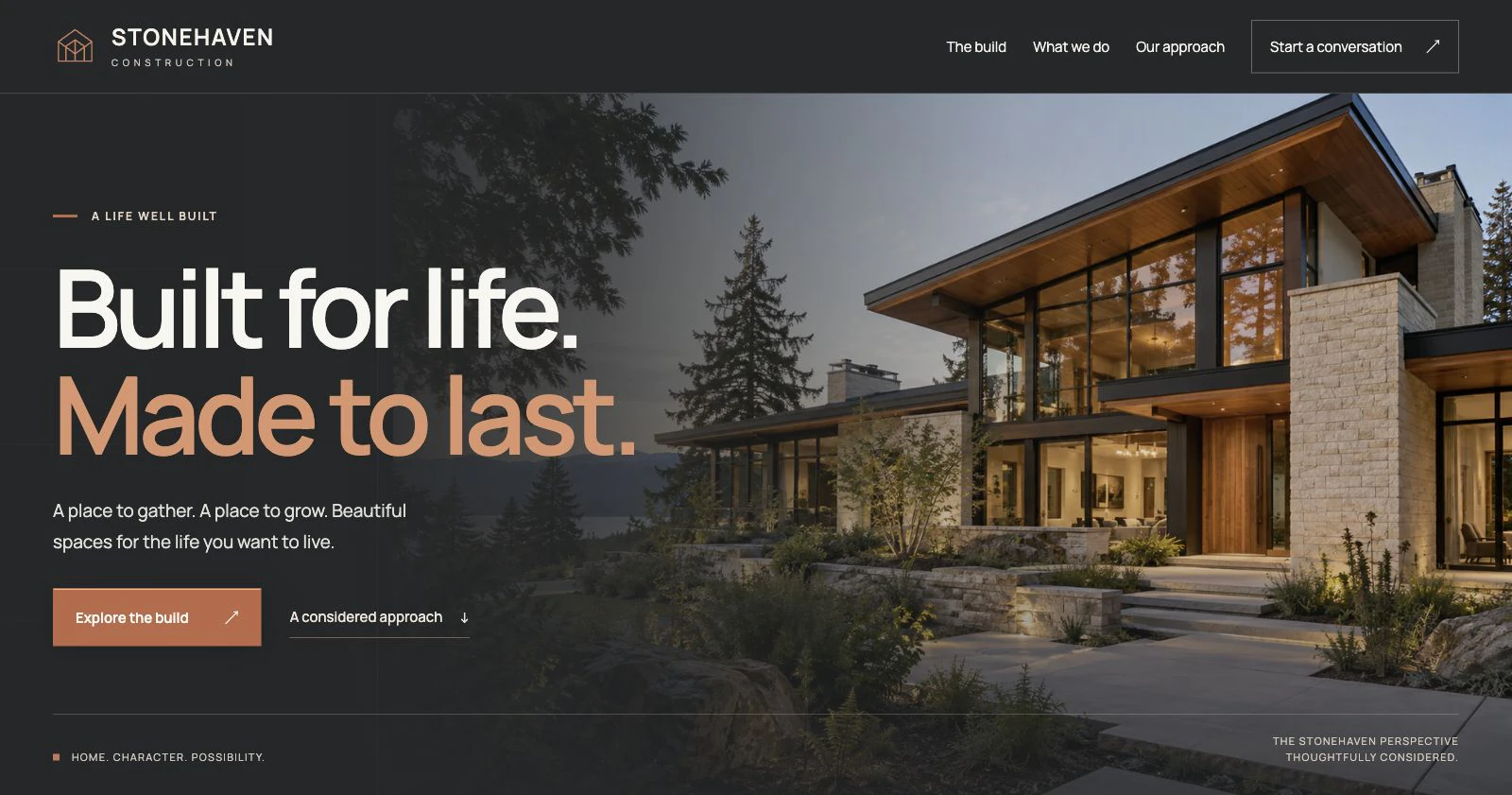
The landscaping business in this guide is hypothetical. The cover shows Umanifest’s fictional Stonehaven Construction demonstration, with AI-generated architectural imagery. It illustrates a website design, not a client campaign or measured marketing result.
Follow the promise made before the click
Put the email, social post, or ad beside the page it opens. Read them in that order. Does the destination continue the same conversation?
Google Ads’ landing-page guidance recommends matching the page’s content and call to action to the ad. It also recommends making important information easy to find and navigation straightforward. That guidance concerns the advertising experience; it is not a promise about organic search rankings.
For the hypothetical cleanup email, the destination should make the cleanup service easy to recognize. It could explain the kinds of work the company actually handles, the service area, and what happens when someone requests an estimate. A homeowner should be able to check those details before sharing contact information.
Write the campaign’s promise in one sentence. Then ask a person who did not create it to open the link and point to where the page explains that promise. Their hesitation gives you something specific to inspect.
Reuse a service page when it answers the same need
Start with the pages you already have. An established yard-cleanup page may be a suitable destination if the campaign promotes the same work to the same audience through the same inquiry process.
Check the opening section. Does it identify the service clearly? Are the relevant details current? Does the main action lead to the right request form or contact route? If the answers are yes, the campaign may need a better link and a small content update.
A headline adjustment might make the service clearer for everyone who visits. An accurate photo caption could answer a recurring question. Those changes can improve an existing page without creating another version to maintain.
This is Umanifest’s planning recommendation, based on reviewing the visitor’s task. The sources do not establish a universal rule that one page type performs better. An existing page is a candidate to assess, not an automatic shortcut.
Build a separate page when the conversation changes
Mailchimp describes landing pages as standalone destinations that can be shared through channels such as email, advertising, and social media. Its guide discusses pages built around specific, short-term goals.
Consider a dedicated destination when a campaign needs information that would confuse the general service page. Perhaps the hypothetical landscaper is inviting existing maintenance customers to request an additional cleanup visit. The usual service page addresses new customers seeking ongoing care. Those visitors have different starting points.
The campaign page could explain who the invitation is for and what information an existing customer should provide. The general page can continue explaining the broader service. Both pages need accurate content and a real next step.
A separate page also creates another maintenance responsibility. Someone needs to review the invitation when availability changes or the campaign ends. Record that person and a review date before publication. Avoid publishing a new page solely because the campaign has a new graphic or subject line.
Give the page enough information to support a decision
A focused page can still answer practical questions. For the cleanup example, the owner might need to confirm whether leaf removal, hauling, or garden-bed work belongs in the service description. The writer should obtain those facts before using them in campaign copy.
Choose proof that relates to the work being promoted. An authorized cleanup project photo with a useful caption can explain more than an unrelated installation gallery. Describe the business’s actual role. A demonstration image needs a visible disclosure, and a customer’s quote needs to be genuine and approved for use.
Keep the primary action easy to identify while leaving useful routes to business information and contact details. A visitor checking who runs the company should have a way to do that. A stripped-down page that hides essential context can leave basic questions unanswered.
For help preparing truthful project evidence, see the contractor project-page guide. A campaign does not need an invented success story to explain a real service clearly.
Make the next step say what it does
“Request a yard-cleanup estimate” tells someone more than “Go” or “Discover.” Use that wording only when the destination really starts an estimate request. If the button opens an appointment provider, name the appointment action accurately.
W3C’s explanation of link purpose supports descriptive link text or meaningful associated context. It also describes continuity between the link and the destination’s title as good practice.
Review the whole transition on a phone. Open the actual campaign link, read the destination’s opening text, and follow its main action. If a visitor moves to another provider, check the service and account shown there. A scheduling link that reaches the wrong business is still the wrong destination, however polished the campaign page looks.
For requests submitted on the website, use the inquiry-confirmation guide to review the receipt and follow-up path. Reaching a form and successfully delivering an inquiry are separate events.
Label campaign traffic without confusing it with results
If Google Analytics is implemented for the site, its custom-URL documentation explains how campaign parameters identify traffic in acquisition reporting. The source, medium, and campaign labels should use a consistent naming convention; differences in capitalization create different values.
For this hypothetical email, a planning sheet might use utm_source=customer-newsletter, utm_medium=email, and utm_campaign=yard-cleanup. Keep labels about the campaign, with no customer names or private details. Test the complete tagged link before sending it.
Adding parameters alone does not install Analytics or verify that someone booked work. Review recorded campaign traffic separately from confirmed inquiries and business records. The website measurement guide explains those distinctions in more detail.
Write a destination brief before building
Use six lines to settle the page decision:
- Who will receive the campaign, and through which channel?
- What exact promise will they see before clicking?
- Which existing page could answer that promise?
- What facts or project evidence do they need before responding?
- What is the intended action, and where does it actually lead?
- Who will review time-sensitive content, and when?
Send that brief to the person writing the campaign and the person updating the website. Have both open the same destination link. If they describe different services or different next steps, resolve the disagreement before the campaign goes out.
Sources & further reading
- Google Ads: optimize your ads and landing pages
- Mailchimp: about landing pages
- Google Analytics: collect campaign data with custom URLs
- W3C: understanding link purpose in context
Published by Umanifest with AI-assisted research and writing. External standards and tools can change; sources are provided so you can check the current guidance.